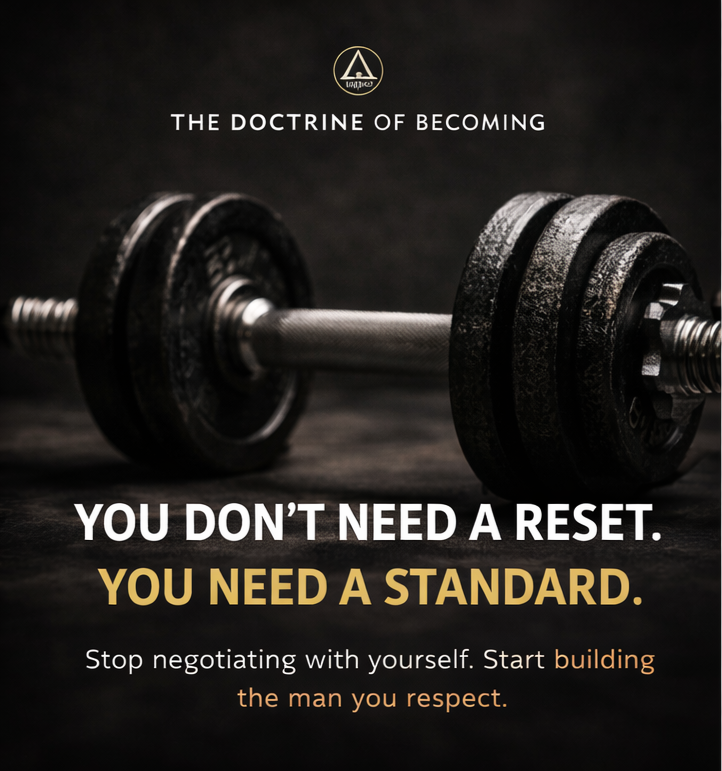
Most people approach health as a phase. That’s why it never lasts.
Three months for abs. A few weeks to lose weight. A short burst of discipline before life returns to normal. This approach fails not because the plan was wrong, but because the
identity never changed. Health and wellness are not projects you complete. They are behaviors you adopt. And behaviors only last when they’re supported by who you believe you are, not how motivated you feel. If your commitment to your health is conditional, temporary, or aesthetic-driven, it will eventually collapse.
Motivation Starts the Journey. Identity Sustains It.
Everyone has motivation at the beginning. Motivation is easy when the goal is new and the results feel close. But motivation is emotional, and emotion is unstable. What keeps someone consistent isn’t motivation. It’s
intrinsic alignment. Intrinsic commitment means you train because it’s who you are, not because you’re chasing a number on the scale. You eat with structure because you respect your body, not because you’re afraid of gaining weight. You move daily because discipline is part of your identity, not because you’re “on a program.”
When the reason becomes internal, the behavior stops being negotiable.
Health Requires You to Become a Different Person
The hardest part of committing to your health isn’t the workouts or the meals. It’s accepting that the version of you who created your current habits cannot sustain the future you want. You can’t outwork an identity mismatch. If you still see yourself as someone who “tries to be consistent,” you will keep trying. If you see yourself as someone who trains, eats with intent, and values structure, your actions begin to reflect that automatically. Health demands an identity shift from “doing” to
being. Being disciplined. Being intentional. Being accountable to yourself.
Short-Term Goals Create Short-Term Behavior
There’s nothing wrong with wanting to lose weight or improve your physique. The problem arises when that’s the only reason you’re showing up. Goals expire. Identity does not. Once the weight drops or the mirror looks better, the urgency disappears. Old habits return because the internal framework never changed. This is why people regain weight, lose momentum, and repeat the cycle year after year. When your health is tied to identity, there is no finish line. There is only maintenance, refinement, and growth.
Structure Is the Bridge Between Intention and Identity
Identity isn’t built through intention alone. It’s built through
structure and routine. Structure removes daily negotiation. Routine removes emotional decision-making. Together, they create consistency. Training on scheduled days. Eating predictable meals. Planning movement into your day. Creating environments that support discipline instead of comfort. These aren’t restrictive. They’re stabilizing. Over time, structure reinforces identity. Identity reinforces discipline. Discipline reinforces self-trust. That’s how change becomes permanent.
Mindfulness Is Discipline in Disguise
Mindfulness in health isn’t about perfection or restriction. It’s about awareness. Awareness of what you consume. Awareness of how food affects your energy. Awareness of how habits compound over time. When you build mindfulness, you stop acting impulsively. You don’t eat for emotion. You don’t train only when it feels convenient. You make decisions from alignment instead of impulse. Mindfulness turns discipline from force into choice.
This Is a Commitment to Continuous Betterment
Committing to your health means committing to becoming slightly better than you were yesterday consistently. Not dramatically. Not obsessively. Not temporarily. It means choosing structure over chaos, discipline over comfort, and long-term alignment over short-term relief.
That commitment changes how you move through life. It sharpens focus. It builds resilience. It creates confidence rooted in self-respect instead of appearance. Health becomes the foundation, not the destination.
Health and wellness are not something you do for a season. They are something you become. When you shift from chasing results to building identity, everything changes. Motivation becomes optional. Discipline becomes natural. Structure becomes grounding. The body follows the identity. And the identity determines the life.