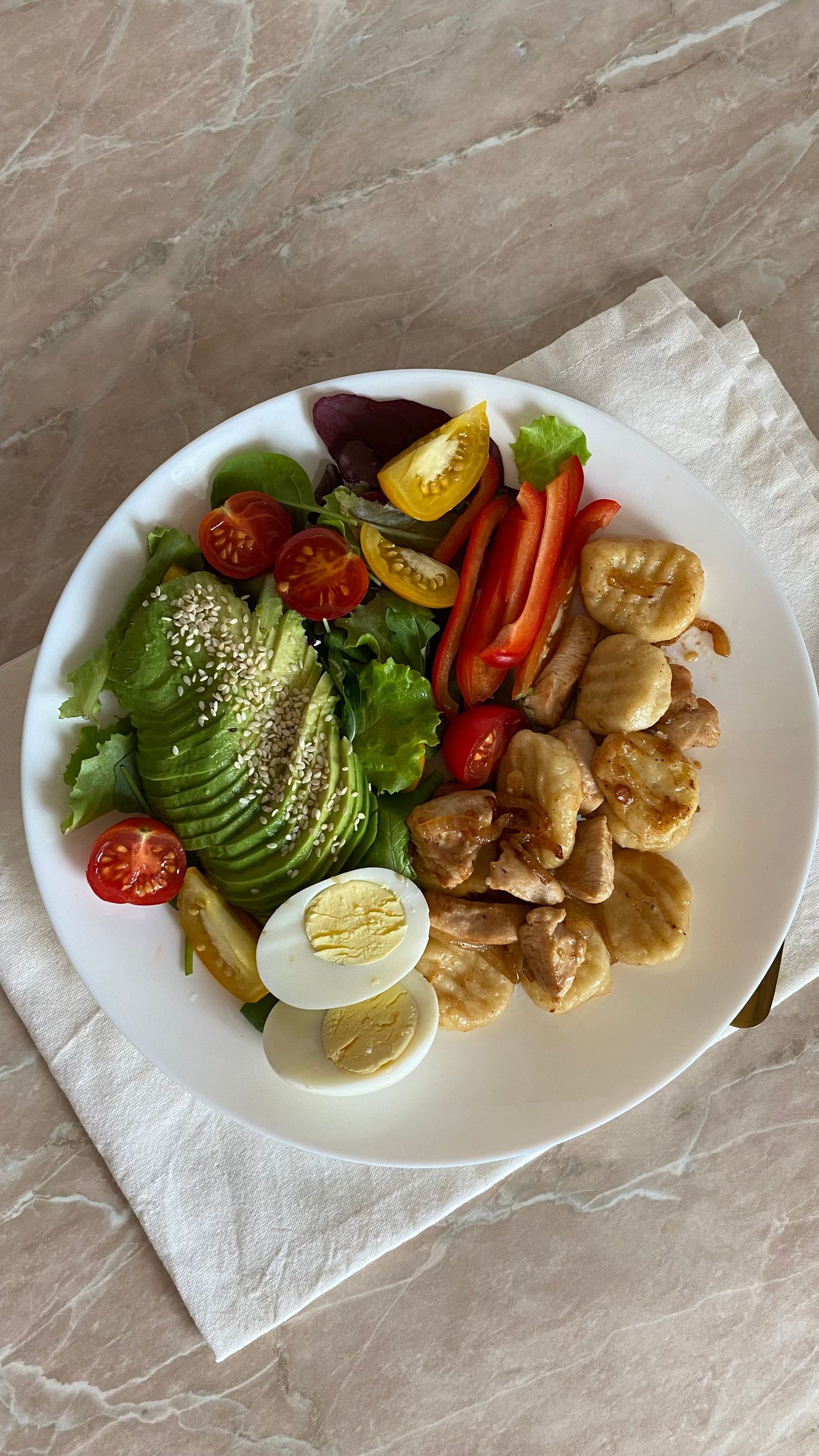
Protein Maxxing: How Much Protein Do You Actually Need to Build Muscle?
Walk down any grocery aisle right now and you'll see it. Protein cereal, protein chips, protein ice cream, protein coffee. Online, the trend has a name: protein maxxing, where the goal is to cram as much protein into the day as you can.
Here's the useful part up front. If you lift and want to build muscle, you probably do need more protein than the old minimum. But the research points to a range, not a race, and past a certain point extra protein stops adding muscle.
Why everyone is talking about protein
Two things pushed protein into the spotlight this year.
The first is the trend itself. The American Medical Association covered protein maxxing in April as the first topic of its "Health vs. Hype" podcast, describing it as a fast-growing social media trend built around maximizing protein to boost metabolism, manage weight and build muscle (AMA).
The second is a change in official advice. For years, the number most people heard was the Recommended Dietary Allowance of about 0.36 grams per pound of body weight a day, which Harvard Health describes as roughly the minimum you need to keep from getting sick, not the amount you're supposed to eat (Harvard Health). The new Dietary Guidelines for Americans, 2025-2030 raised the goal to about 0.55 to 0.7 grams per pound a day (Dietary Guidelines).
That change hasn't gone unchallenged. A perspective in The Journal of Nutrition argues the new target leans mainly on weight-loss trials and doesn't give enough weight to chronic disease outcomes like heart and kidney disease (Journal of Nutrition). So even the experts don't fully agree on one number for everyone.
For someone who trains, though, there's a more specific body of research.
What the muscle research says
The study most coaches point to is a 2018 meta-analysis in the British Journal of Sports Medicine. It pooled 49 randomized trials with 1,863 people doing resistance training for at least six weeks. Protein supplementation improved gains in strength and muscle, but once total intake reached about 0.7 grams per pound a day, extra protein produced no further gains in fat-free mass (Morton et al., PubMed).
Two details from that paper are worth knowing:
- The 1.6 figure is an estimate. The confidence interval ran up to about 1 gram per pound, which is why you'll often see "1.6 to 2.2" quoted as a range for lifters.
- Protein supplements helped more in people who already trained, and less as age went up.
It's also worth saying who funds this field. The lead author disclosed grant support from the US National Dairy Council, which had supported some of the trials reviewed. That doesn't make the result wrong, but it's the kind of thing you should know.
The takeaway is simple. Lifting is what builds muscle. Protein supports it. The AMA piece makes the same point: if you want more muscle, you need resistance training alongside the protein.

The "30 grams per meal" myth
You've probably heard that your body can only use about 20 to 30 grams of protein at a time, and the rest is wasted. That idea is shakier than it sounds.
A 2018 review in the Journal of the International Society of Sports Nutrition found that while bigger doses do lead to more protein being burned for energy, not all of the extra is lost, and some still goes to building tissue. The authors suggested about 0.18 grams per pound per meal across at least four meals to reach at least 0.7 grams per pound a day (Schoenfeld & Aragon, PubMed).
A 2023 study from Maastricht University pushed further. Twelve participants who took 100 grams of protein after training had a larger and longer muscle-building response, lasting more than 12 hours, than when they took 25 grams. The researchers concluded the response had been underestimated (Trommelen et al., PubMed).
Keep that in perspective. It was a small lab study measuring protein synthesis over hours, not muscle gained over months. It's good news if your schedule only allows two big meals. It isn't a reason to drink 100 grams in one shake.
Can you overdo it?
For most healthy people, intakes in the guideline range appear to be fine. Cleveland Clinic notes the bigger concern is kidney disease, which many people have without knowing it. If your kidneys aren't working well, a high-protein diet adds load, and staying at the lower end or below may be wiser (Cleveland Clinic).
The other risk is less dramatic. Cleveland Clinic also points out that when shakes and bars crowd out plants, you can end up short on fiber and other nutrients, and protein that comes mostly from processed or fatty red meat can bring heart-health concerns (Cleveland Clinic). Protein chips are still chips.

How to use this
Here's how I'd apply it. It's a reasonable reading of the research, not a prescription.
Find your number. Multiply your body weight in pounds by 0.7. That's a sensible daily target if you're training for muscle. For a 180-pound man, 180 x 0.7 = about 126 grams a day. If you're well past that, more probably isn't adding muscle.
Check what you already eat. Track two normal days before buying anything. You may be closer than you think.
Spread it out. Three or four meals with a solid protein portion is easier to hit, and easier to keep up, than one huge dinner. For that same 180-pound man, roughly 30 grams per meal across four meals is a fair working target.
Eat food first. Eggs, fish, chicken, Greek yogurt, beans and lentils do the job and bring other nutrients with them. A shake is a tool for busy days, not the foundation.
Train hard enough to need it. In the Doctrine of Becoming, nutrition is the Citadel and training is the Forge. The Citadel supports the Forge. It doesn't replace it.
If you're also wondering about supplements, our breakdown of creatine: what's real and what's hype covers the one with the strongest research behind it. And if you want the same no-drama approach for movement, read Do You Really Need 10,000 Steps a Day?
The pattern is the same across all three. Find the range the evidence supports, build a standard you can meet on a bad day, and stop chasing the extreme. That idea runs through You Don't Need a Reset. You Need a Standard.
Is There Really a 30g-Per-Meal Limit?
You've probably heard that your body can only use about 30 grams of protein at a time, and the rest goes to waste. A 2023 trial in Cell Reports Medicine (Trommelen et al.) tested that directly. Thirty-six young men ate either 25 grams or 100 grams of protein after a full-body lifting session.
The 100-gram meal produced a larger and longer muscle-building response, lasting more than 12 hours. The body didn't hit a hard ceiling. It just took longer to use the bigger dose.
The study was small and only looked at young men in a lab, so don't read it as a reason to cram all your protein into one meal. The practical takeaway is simpler: hitting your daily total matters most, and you don't need to stress about splitting it into perfect 30-gram portions. (Source: Trommelen et al., 2023, https://pmc.ncbi.nlm.nih.gov/articles/PMC10772463/)
Build it into something bigger
If you want a starting structure for training, nutrition and mindset, download The Doctrine of Becoming, a free 21-day reset of practices you adapt into your own lifestyle. Get it here.
And if you'd rather have someone build your plan with you and keep you accountable, apply for 1:1 coaching at the $99/month founding rate.
This post is for education, not medical advice. If you have kidney disease, diabetes or any other health condition, talk to your doctor or a registered dietitian before raising your protein intake.
Recent Posts