

BPC-157 and the Peptide Gold Rush: What the Evidence Actually Shows

jonathan • November 2, 2026

Share this article

Peptides had a big week. On October 28, the US Department of Health and Human Services announced a policy that lets licensed compounding pharmacies make six peptides that were never approved, including BPC-157 and TB-500, the two most often sold to lifters as a "Wolverine stack" for faster recovery (Federal Register). Within days, telehealth companies were lining up peptide offerings.


The same week, a coroner in Victoria, Australia, found that the death of actor and martial artist Richard Norton was "triggered by" his injection of two other peptides, CJC-1295 and ipamorelin (ABC News).


If you train, you've probably seen the ads by now. So here's the plain version: what changed, what the research on these compounds actually shows, and what keeps your muscle and your joints healthy.


What the new policy actually does

A lot of posts are calling this "FDA approval." It isn't. The policy is called enforcement discretion, which means HHS says it won't take action against pharmacies and doctors who compound these six peptides, as long as they meet 10 conditions. The six are BPC-157, TB-500, epitalon, KPV, MOTS-c and semax (Fox Rothschild).


A few details matter if you're tempted:


  • They're still unapproved drugs. FDA hasn't reviewed compounded products for safety, effectiveness or quality, and the policy is interim and can be pulled at any time.
  • FDA's own drug reviewers recommended against it. For each of the six peptides, FDA's Center for Drug Evaluation and Research advised against adding it to the list, and HHS went ahead anyway.
  • Stacks aren't covered. Products must contain a single peptide. Blended or "stacked" products fall outside the policy.
  • You need a prescription. It applies to patient-specific prescriptions filled with ingredients from FDA-registered manufacturers that pass purity and contamination testing.


HHS's stated goal is to pull people away from "research use only" vials shipped from overseas sellers and toward a supply that's at least tested (Fox Rothschild). That's a fair point about quality control. Whether these compounds do anything useful is a different question.


Red pharmacy sign with a bowl and snake symbol on a building

What the research on BPC-157 shows

BPC-157 is the peptide you'll hear about most. It's sold for tendon, ligament and muscle injuries, and the online claims are big.


The best summary is a 2025 systematic review in HSS Journal by researchers at Case Western Reserve University. They screened 544 articles and found 36 studies worth including. Thirty-five were preclinical, mostly in animals. Only one was in humans: a look back at 12 people with chronic knee pain who got an injection, 7 of whom reported relief for more than six months. The authors found no clinical safety data in humans at all, and noted that BPC-157 is banned in professional sports (Vasireddi et al., PubMed).


The animal results are promising, and that's worth saying. But rat tendons aren't your shoulder, and 12 people with no control group can't tell you whether a compound works or whether they'd have improved anyway. The review itself flags the risks of unregulated manufacturing and contamination.


What happened to Richard Norton

The CJC-1295 and ipamorelin combination is sold to lifters as "natural growth hormone" for lean muscle and fat loss. These peptides weren't part of the US policy, and neither is approved in Australia.


Norton was 75. According to the coroner's findings, he'd been seeking help for fatigue, slow recovery, shoulder pain and loss of lean muscle. He did nearly everything "right": a doctor reviewed his history, explained the experimental nature of the treatment, ran baseline blood tests and had him sign a consent form. A licensed compounding pharmacy made the product. He had been taking double his prescribed dose, and hours after a nurse told him to go back to the prescribed amount, he collapsed after an injection and died (ABC News).


An expert who reviewed the case for Australia's medical board said there is "insufficient evidence that CJC1295/Ipamorelin is safe, effective or beneficial for human use." The coroner recommended that Australia's drug regulator consider tighter restrictions (ABC News).


One case doesn't tell you how risky these peptides are across everyone who uses them. It does show that a prescription and a pharmacy label don't make an unproven drug safe, and that "it's natural, it's just amino acids" isn't an argument.


What people are saying

The debate online splits two ways. One side sees the policy as harm reduction: better a tested pharmacy product than a vial from an anonymous seller. The other side says it gives compounds that never passed trials a stamp of legitimacy. Both points are real.


Meanwhile, a lot of the "my peptide journey" posts you'll see on X come from accounts that sell peptides. On Reddit, lifters trade their own dosing and lab numbers in threads about running CJC-1295 with ipamorelin (Reddit). That's a window into what people are doing, not evidence that it works. A higher blood marker isn't the same thing as more muscle.


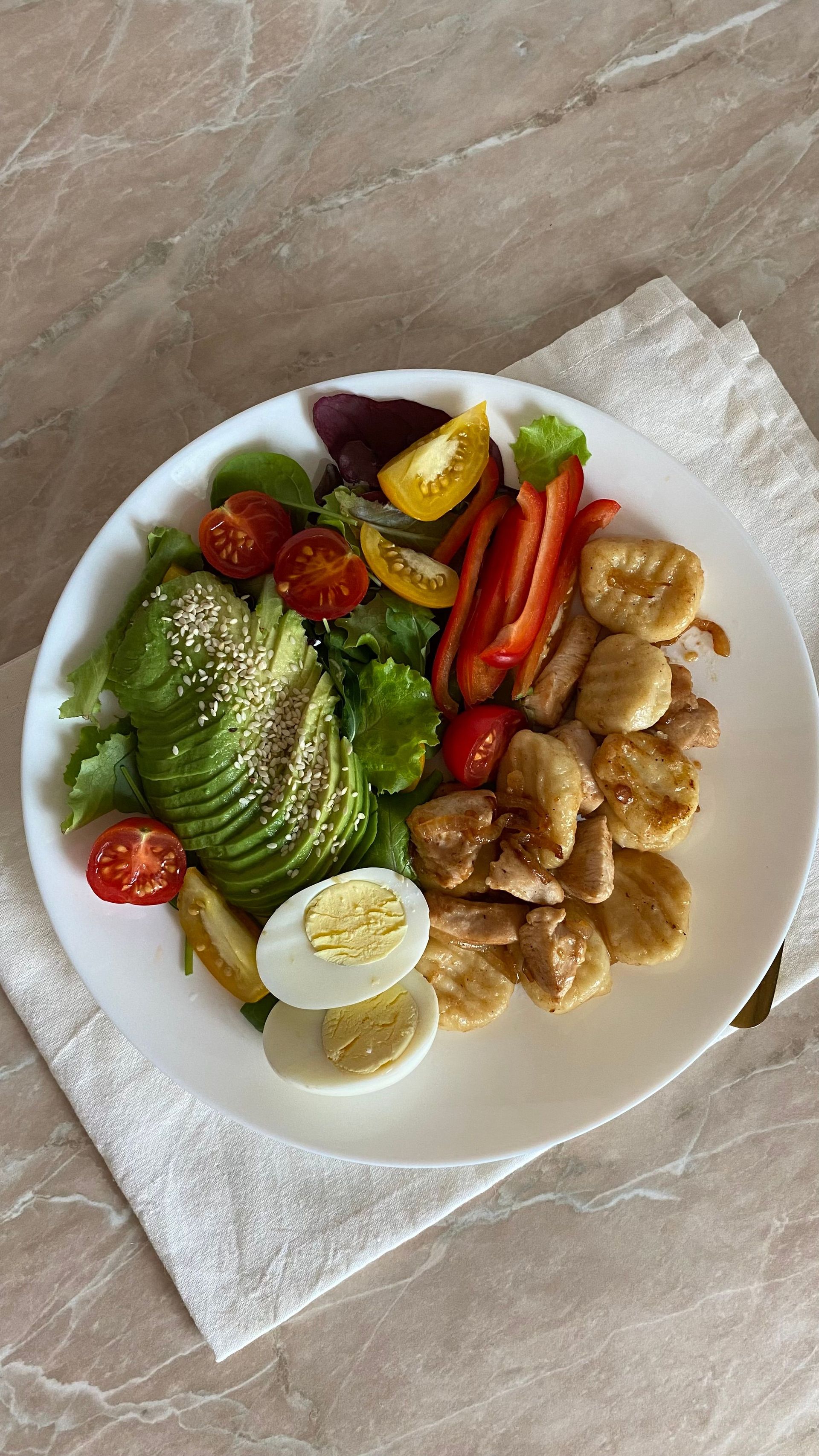
Plate of grilled chicken, avocado, tomato and boiled egg salad

What actually protects muscle and recovery

The pitch for most peptide stacks is "keep muscle on a cut" or "recover faster." Those goals have well-tested answers that cost a lot less than a monthly subscription.


Eat enough protein. A large 2018 meta-analysis found muscle gains from protein topped out around 0.7 grams per pound of body weight a day (Morton et al., PubMed). For a 180 lb man, that's about 126 grams. We broke this down in How Much Protein Do You Actually Need to Build Muscle?


Keep lifting hard, even in a deficit. In a 2016 McMaster University trial, young men eating about 40% below their needs for four weeks gained lean mass and lost fat when they ate more protein and trained hard six days a week (Longland et al., PubMed). Training is the signal your body needs to keep muscle. We covered what that means for dieting in Does Fasting Burn Muscle?


If you want a supplement, pick one with evidence. Creatine has decades of human research behind it. Our creatine breakdown covers what it does and doesn't do.


If you're hurt, see someone qualified. A sports medicine doctor or physical therapist can tell you what's actually wrong. An injectable from an ad can't.


That's the Forge and the Citadel doing their jobs: training and nutrition first. The Legacy pillar, discipline, is what keeps you on them when a shortcut looks easier. A peptide won't fix a program you don't follow, sleep you don't get or meals you skip. As we put it in You Don't Need a Reset. You Need a Standard., progress comes from what you do on ordinary days.


Start with the basics

If you want a starting structure for training, nutrition and mindset, download The Doctrine of Becoming, a free 21-day reset of practices you adapt into your own lifestyle. Get it here.


And if you'd rather have someone build your plan with you and keep you accountable, apply for 1:1 coaching at the $99/month founding rate.


This post is for education, not medical advice. It doesn't recommend using, dosing or sourcing any peptide. If you're considering one, talk to your doctor first.


Recent Posts

Rows of black dumbbells on a rack in an empty gym
By jonathan • November 3, 2026
A new study found supersets built the same muscle and strength in 36% less time. Here's what it showed and the pairing mistake that cuts your gains.
Bowl of salad with egg, chicken, tomatoes and vegetables on a table
By jonathan • October 31, 2026
MrBeast says a 14-day water fast cost him six pounds of muscle. Here's what the research says about fasting and muscle loss, and a better way to cut.
Bowls of mung beans, buckwheat, nuts and seeds on a table
By jonathan • October 30, 2026
Protein maxxing is everywhere. Here's how much protein research says you need to build muscle, why more isn't always better, and how to hit it without the hype.

An empty dirt footpath running through a park at sunrise
By jonathan • October 29, 2026
Do you need 10,000 steps a day? New research suggests 7,000 may be enough, and that pace matters. Here's what the studies show and how to use it.
A scoop of creatine monohydrate powder next to a shaker bottle
By jonathan • October 29, 2026
Creatine is trending again. Here's what the Texas A&M study, the hair-loss fear and the 'stop taking it' posts actually show.
Man wrapping wrist in gym. Barbell, water bottle, and weights in background.
By chu • February 9, 2026
Health and wellness require an identity shift, not a 90-day push. Learn why discipline, structure, and intrinsic commitment create lasting change.
Man lifting barbell; text reads:
By chu • February 6, 2026
Health and fitness build resilience, discipline, and delayed gratification. Learn why mastering your body creates success in every area of life.

Stack of gray stones balanced on a rocky shoreline with a blurred ocean and sky in the background.
By chu • February 5, 2026
Feel stuck, unmotivated, or inconsistent with fitness? Learn how discipline not motivation rebuilds confidence, structure, and real results.
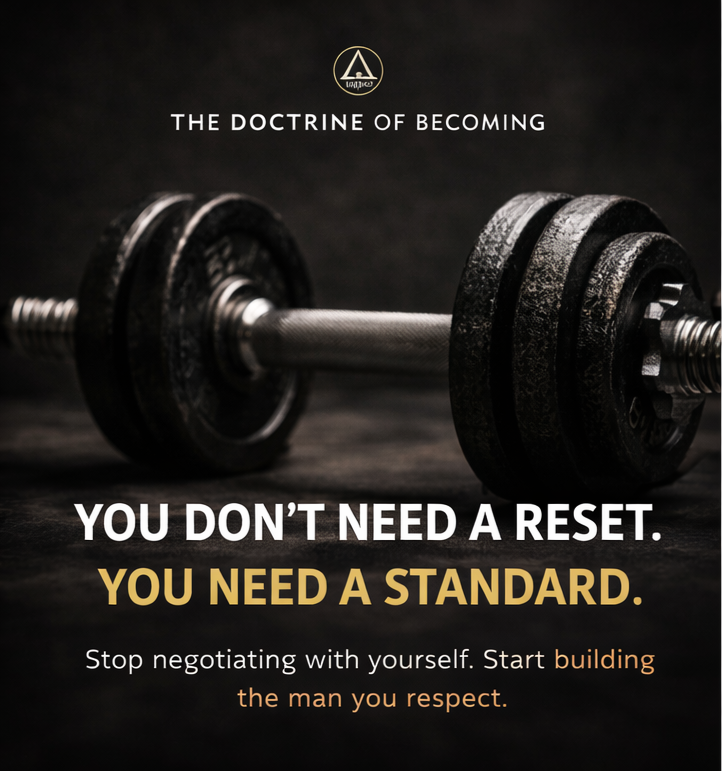
Dumbbell with text
By chu • January 15, 2026
Most men don’t fail from lack of motivation they fail from lack of structure. In this Doctrine of Becoming entry, Jonathan Chu breaks down why “reset culture” keeps men stuck, how self-negotiation erodes identity, and how one non-negotiable standard can rebuild discipline, confidence, and sovereignty.

Hourglass with sand trickling down, surrounded by antique clocks.
By chu • January 14, 2026
Most men don’t fail from lack of motivation they fail from delay. This Doctrine of Becoming essay breaks down why discipline isn’t intensity, how identity drift happens in the transition phase, and the evidence-based system to rebuild self-trust and sovereignty.
Show More