
Supersets: Same Muscle in 25 Fewer Minutes (and the Pairing Mistake That Kills It)

jonathan • November 3, 2026

Share this article

"I don't have time to lift" might be the most common reason guys give for skipping the gym. This fall, a study gave that excuse a hard time. Men's Health ran it under the headline that supersets cut gym time by 36% without costing you muscle (Men's Health), and the time question has been all over X since, including a "20 minutes a day, which exercise wins?" post from a former NBA player that drew more than a million views (X).


Not everyone's sold. A clip of one creator calling supersets "a waste of time" made the rounds in October (X), and plenty of people still file them under cardio.


So who's right? Mostly the study, with one big catch that most posts skip: how you pair the exercises matters a lot.


What a superset actually is

A superset means doing a set of one exercise and then going straight into a set of a different exercise, with little or no rest between them. You rest after the pair, not after each set. Because you rest half as often, the workout gets shorter.


There are a few kinds. The one with the best evidence is the opposing-muscle superset, sometimes called agonist-antagonist: a push paired with a pull, or a front-of-the-leg move paired with a back-of-the-leg move. The other common kind stacks two exercises for the same muscle back to back, like bench press followed by dumbbell bench.


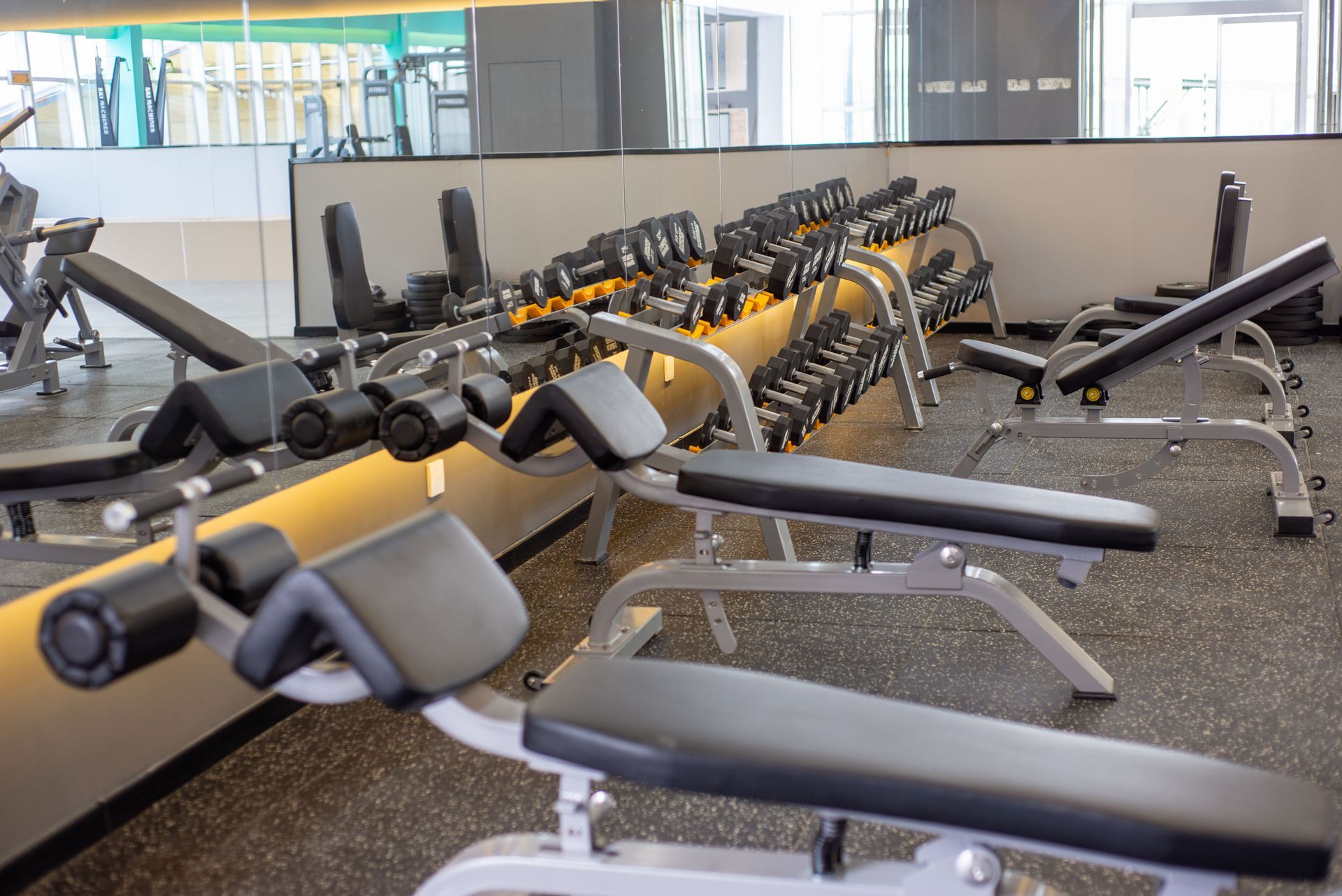
Rows of dumbbells on a rack beside adjustable weight benches in an empty gym

What the new study found

The trial behind the headlines was led by Ryan Burke and Brad Schoenfeld and published in Science & Sports in January 2026 (ScienceDirect). Some coverage said 50 lifters. Fifty volunteered, but 43 finished: 34 men and 9 women aged 18 to 40, all with at least a year of lifting experience (free preprint).


For eight weeks, both groups trained twice a week with the same six exercises: lat pulldown, Smith machine bench press, seated leg curl, leg extension, dumbbell curl and cable triceps pushdown. Everyone did 4 sets of 8 to 12 reps per exercise, taken to failure.


The traditional group rested 2 minutes between every set. The superset group paired pulldown with bench, leg curl with leg extension, and curls with pushdowns. They went from one exercise to the other in about 20 seconds, then rested 2 minutes after each pair.


The results, per the preprint:


  • Same muscle growth. Both groups had similar increases in muscle thickness, measured with ultrasound.
  • Same strength, power and endurance gains. Bench press max and the other tests improved about the same in both groups.
  • Much shorter workouts. Superset sessions took 44.4 minutes on average, versus 69.1 minutes for traditional sets. That's about 25 minutes saved per workout, or 36%.
  • Similar total work. Total weight lifted across a session was about the same.


This isn't a one-off, either. A 2025 meta-analysis in Sports Medicine pooled 19 studies with 313 participants and reached the same conclusion: supersets matched traditional sets for total reps, volume and long-term gains in strength and muscle size, in less time (Zhang et al., PubMed).


The pairing mistake that kills it

Here's the nuance. That same meta-analysis split supersets by type. When people paired opposing muscles, they actually completed more reps than with traditional sets. When they paired two exercises for the same muscle, total volume dropped, and by a large margin (Zhang et al., PubMed).


That makes sense when you think about it. If you bench and then go straight to dumbbell bench, your chest and triceps start the second exercise already tired, so you lift less. If you bench and then do a row, your back is fresh while your chest gets a break.


So if your "superset" is two chest exercises in a row, you're not getting the deal the study found. You're trading volume for time.


A 2025 review in the Journal of Strength and Conditioning Research came to a similar read: supersets produce similar results and save time, but power output tends to be better with traditional sets (Mang, Beam & Kravitz). If you're training to be explosive, keep your power work as straight sets.


Close-up of a cable machine pulley and weight stack in a gym

What the hype leaves out

Supersets feel harder. In the Burke and Schoenfeld trial, people rated superset sessions about a point harder on a 10-point effort scale (8.1 vs 7.2). Nausea was common in both groups, and more common with supersets: 17 people reported it in the superset group versus 9 in the traditional group, along with a few cases of vomiting in each. The authors note these reports were collected from memory at the end of the study, so treat the exact numbers with caution (preprint). Their advice for people new to full-body supersets is to stop sets a little short of failure or do fewer sets at first, then build up.


It's one routine. The trial used mostly machines and single-joint leg exercises. The authors say outright that it doesn't tell us how supersets work with squats, deadlifts or leg presses. Applying it to heavy compound lifts is a guess, not a finding.


"Supersets are cardio" is partly true, for the wrong kind. No-rest circuits with light weights are a different workout. The trial used hard sets taken to failure with 2 minutes of rest after each pair, and that built muscle as well as straight sets.


"So I can do fewer sets" is not what it showed. Both groups did the same number of sets. The time came from cutting rest, not cutting work.


How to use supersets

  • Pair opposing muscles. Push with pull (bench with row, overhead press with pulldown), front with back (leg extension with leg curl), or biceps with triceps.
  • Keep the switch fast and the rest after the pair. The study used about 20 seconds between exercises and 2 minutes after each pair.
  • Keep the sets hard. The gains came from real effort, not light pumping.
  • Keep heavy or explosive lifts as straight sets if you want, and superset the accessory work around them.
  • Plan around the gym. Holding two stations at 6pm is the real-world catch. Dumbbells, cables or two spots close together make it easier, though lifters in a r/GarageGym thread point out that changing plates on adjustable dumbbells slows things down.


The rest of the basics still apply. Muscle needs enough protein to grow, and we covered the numbers in How Much Protein Do You Actually Need to Build Muscle?


Time was never the real problem

A 45-minute workout twice a week built the same muscle as a 70-minute one in this study. For most guys, the barrier was never the 25 minutes. It's not having a plan and not holding a standard when the week gets busy. We wrote about that in You Don't Need a Reset. You Need a Standard.


If you want a simple structure to start with, download The Doctrine of Becoming, a free 21-day reset of practices you adapt into your own lifestyle. Get it here.


And if you'd rather have someone build a time-efficient program with you and keep you accountable, apply for 1:1 coaching at the $99/month founding rate.


Recent Posts

Black and white photo of a barbell and weight plates on a gym floor
By jonathan • November 2, 2026
Pharmacies can now make BPC-157 and other unapproved peptides in the US. Here's what the research shows, what changed, and what actually protects muscle.

Bowl of salad with egg, chicken, tomatoes and vegetables on a table
By jonathan • October 31, 2026
MrBeast says a 14-day water fast cost him six pounds of muscle. Here's what the research says about fasting and muscle loss, and a better way to cut.
Bowls of mung beans, buckwheat, nuts and seeds on a table
By jonathan • October 30, 2026
Protein maxxing is everywhere. Here's how much protein research says you need to build muscle, why more isn't always better, and how to hit it without the hype.

An empty dirt footpath running through a park at sunrise
By jonathan • October 29, 2026
Do you need 10,000 steps a day? New research suggests 7,000 may be enough, and that pace matters. Here's what the studies show and how to use it.
A scoop of creatine monohydrate powder next to a shaker bottle
By jonathan • October 29, 2026
Creatine is trending again. Here's what the Texas A&M study, the hair-loss fear and the 'stop taking it' posts actually show.

Man wrapping wrist in gym. Barbell, water bottle, and weights in background.
By chu • February 9, 2026
Health and wellness require an identity shift, not a 90-day push. Learn why discipline, structure, and intrinsic commitment create lasting change.

Man lifting barbell; text reads:
By chu • February 6, 2026
Health and fitness build resilience, discipline, and delayed gratification. Learn why mastering your body creates success in every area of life.

Stack of gray stones balanced on a rocky shoreline with a blurred ocean and sky in the background.
By chu • February 5, 2026
Feel stuck, unmotivated, or inconsistent with fitness? Learn how discipline not motivation rebuilds confidence, structure, and real results.
Dumbbell with text
By chu • January 15, 2026
Most men don’t fail from lack of motivation they fail from lack of structure. In this Doctrine of Becoming entry, Jonathan Chu breaks down why “reset culture” keeps men stuck, how self-negotiation erodes identity, and how one non-negotiable standard can rebuild discipline, confidence, and sovereignty.

Hourglass with sand trickling down, surrounded by antique clocks.
By chu • January 14, 2026
Most men don’t fail from lack of motivation they fail from delay. This Doctrine of Becoming essay breaks down why discipline isn’t intensity, how identity drift happens in the transition phase, and the evidence-based system to rebuild self-trust and sovereignty.
Show More