Can Fewer Sets Build Muscle? What Low-Volume Training Can and Can't Do

jonathan • November 7, 2026

Share this article

Can you spend less time lifting and still make progress? Low-volume training is appealing because time is limited. The mistake is turning that practical question into a contest over who can do the fewest sets or push closest to failure.

Fewer sets may be a workable compromise. They are not automatically better, and more sets are not automatically wasted. The useful question is how much training supports your goal within the time and recovery you have.

One lifter's experiment is not your prescription

A personal training experiment cannot tell us that cutting sets caused muscle retention, or that greater effort made up for the reduction. There is no controlled comparison separating those explanations from diet, prior training, or ordinary variation.

That is why this article does not use the body-composition numbers circulating around Jeff Nippard's low-volume experiment. Lean mass is not the same as skeletal muscle, and measurements can shift with hydration and other factors. Small changes do not establish muscle gained or lost. An anecdote can raise a question worth testing, but it cannot settle the best training dose for everyone.


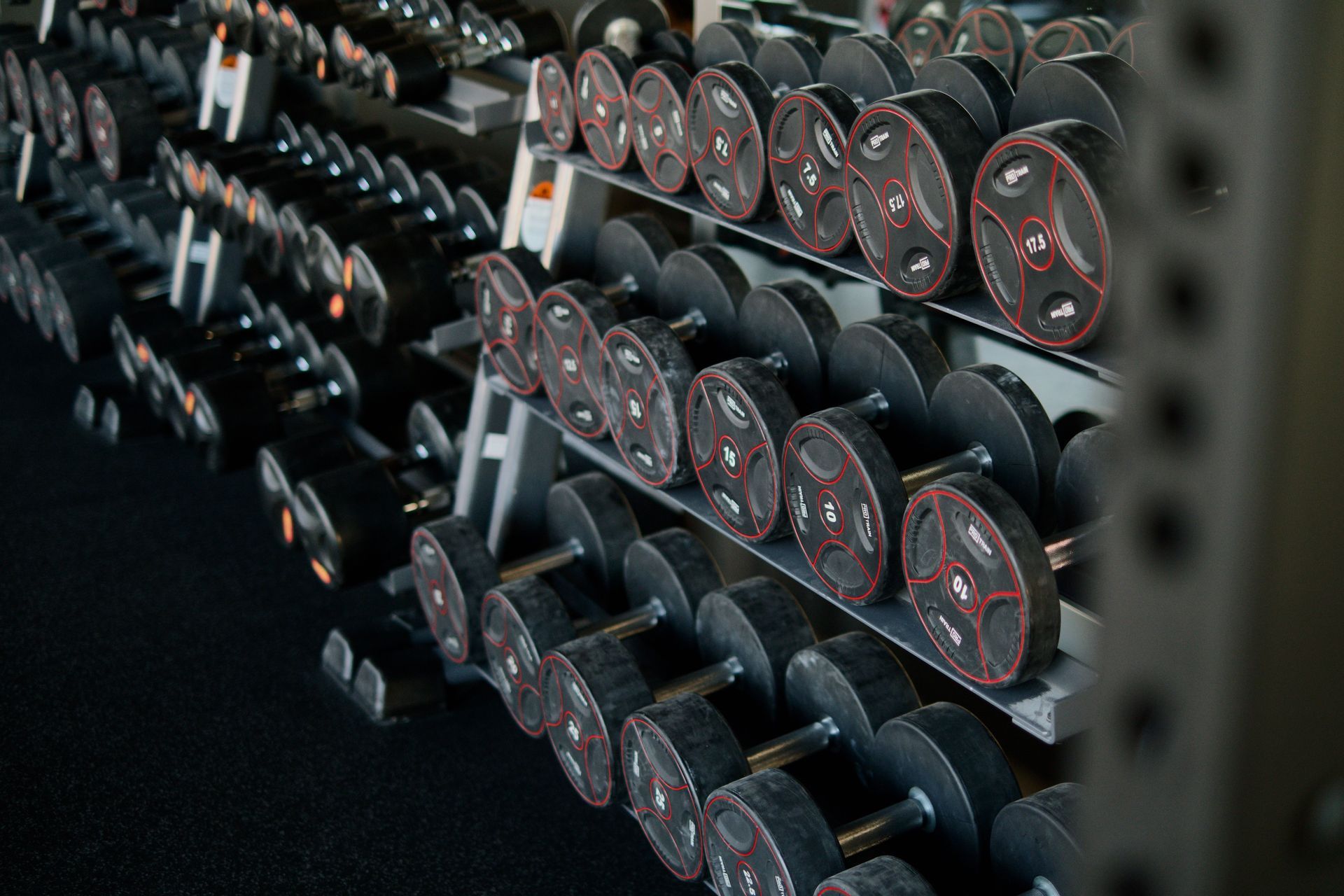
Empty dumbbell rack in a quiet gym corner

More weekly sets tend to help, with diminishing returns

Schoenfeld and colleagues' dose-response meta-analysis included 15 studies and 34 treatment groups. Higher weekly set volume was associated with greater muscle growth. That supports taking volume seriously, not declaring a universal minimum or promising a fixed amount of growth for each extra set.

The paper's comparison of fewer than 5, 5 to 9, and at least 10 weekly sets per muscle showed a statistical trend rather than meeting the conventional significance threshold. Those categories are not proven boundaries between ineffective, effective, and optimal training.

Pelland and colleagues' newer meta-regressions included 67 studies and 2,058 participants. Their models linked greater weekly volume with greater muscle-size and strength gains, with diminishing returns. The flattening was more pronounced for strength.

The authors reported a 100% posterior probability of a positive volume slope within their models. That is a model-based result, not certainty that every additional set helps every person. Study averages cannot tell you exactly where your own useful volume ends, and the abstract does not establish a single ideal weekly set count.

Counting also matters. Pelland's best-supported approach gave indirect sets partial credit rather than treating every exercise as equally specific to every muscle. A press and a triceps isolation exercise do not have to count identically toward triceps work. Consistent logging is more useful than pretending every set is interchangeable.


Empty cable stack with plates nearby in a gym

Effort matters without making failure mandatory

Working sets differ in load, repetitions, technique, and how close you stop to being unable to complete another repetition. Repetitions in reserve describes that last factor. It is an estimate, not a perfect measurement of the stimulus.

Robinson and colleagues' exploratory meta-regressions associated training closer to failure with greater hypertrophy, but found a negligible relationship with strength gains. The authors cautioned that repetitions in reserve were estimated from study descriptions and that the exact relationship remained unclear.

Meanwhile, Refalo and colleagues' systematic review found no evidence that reaching momentary muscular failure was superior to stopping short for hypertrophy in that comparison. Taken together, these findings support paying attention to effort. They do not require every productive set to reach failure or finish within two repetitions of it.

Warm-up sets prepare you for the work that follows. For practical logging, record them separately from planned working sets. That is a bookkeeping convention, not a claim that lighter work has zero value. Likewise, calling a set "junk" does not establish that it produced no stimulus. A set can be less useful for your current goal without being worthless.

Maintenance, growth, and maximizing growth are different goals

Keeping what you have during a busy period is different from seeking new muscle, and both differ from trying to maximize growth. Evidence about gaining strength also cannot automatically answer a question about muscle size. These goals need separate judgments.

The two volume reviews concern training adaptations. They do not establish your personal maintenance minimum. A reduced program that fits your schedule can be a reasonable coaching choice, but it should not be sold as proven equivalent to a larger program for maximizing hypertrophy.

How to test a shorter program

The following are coaching suggestions, not a routine tested by these reviews. Start with your current training and constraints rather than copying a stranger's smallest possible workout.

  • Choose the goal first. Decide whether this period is about maintaining consistency, pursuing strength, or prioritizing muscle growth.
  • Log working sets, load, repetitions, and estimated effort. Keep technique and exercise selection consistent enough to make comparisons useful.
  • If time is tight, consider trimming redundant exercises or some sets. Do not assume the sets you keep must all reach failure.
  • Review trends across repeated sessions. If progress stalls, examine recovery and execution before deciding that more sets are the answer. Adjust gradually rather than changing everything together.
  • Keep nutrition in view. Our guide to protein for building muscle covers that separate part of the plan.

You can also save time without reducing weekly sets. Our supersets article explores a different approach. Shortening the clock and reducing the training dose are separate decisions.

Choose a dose you can evaluate

Low-volume lifting is an option to assess, not a test of character. More volume tends to support greater gains on average, with diminishing returns. Your plan still needs to fit your goal and leave room to adjust. Neither a long workout nor an exhausting final repetition proves the program is right.

For help building consistent habits, download The Doctrine of Becoming, a free 21-day reset of practices you adapt to your own lifestyle. Get the free reset.

For an individualized training plan and accountability, apply for 1:1 coaching at $99/month.


Recent Posts

Empty stationary bikes in a quiet gym cardio corner, soft light, no people
By jonathan • November 6, 2026
Zone 2 isn't dead—Attia refined it for your clock. Here's when easy cardio still wins and when limited hours need harder work.
Empty gym with treadmills and cardio machines, free weights and lockers in bright light
By jonathan • November 5, 2026
Can you lift for size and still do cardio without killing gains? 43 studies say yes for muscle—power and running dose are the real catches.
Dark empty industrial corridor with light reflecting on the floor
By jonathan • November 4, 2026
Took weeks or months off lifting? Here's what research says about muscle memory: what fades, what stays and how to come back after a gym break.
Rows of black dumbbells on a rack in an empty gym
By jonathan • November 3, 2026
A new study found supersets built the same muscle and strength in 36% less time. Here's what it showed and the pairing mistake that cuts your gains.
Black and white photo of a barbell and weight plates on a gym floor
By jonathan • November 2, 2026
Pharmacies can now make BPC-157 and other unapproved peptides in the US. Here's what the research shows, what changed, and what actually protects muscle.
Bowl of salad with egg, chicken, tomatoes and vegetables on a table
By jonathan • October 31, 2026
MrBeast says a 14-day water fast cost him six pounds of muscle. Here's what the research says about fasting and muscle loss, and a better way to cut.
Bowls of mung beans, buckwheat, nuts and seeds on a table
By jonathan • October 30, 2026
Protein maxxing is everywhere. Here's how much protein research says you need to build muscle, why more isn't always better, and how to hit it without the hype.
An empty dirt footpath running through a park at sunrise
By jonathan • October 29, 2026
Do you need 10,000 steps a day? New research suggests 7,000 may be enough, and that pace matters. Here's what the studies show and how to use it.
A scoop of creatine monohydrate powder next to a shaker bottle
By jonathan • October 29, 2026
Creatine is trending again. Here's what the Texas A&M study, the hair-loss fear and the 'stop taking it' posts actually show.
Man wrapping wrist in gym. Barbell, water bottle, and weights in background.
By chu • February 9, 2026
Health and wellness require an identity shift, not a 90-day push. Learn why discipline, structure, and intrinsic commitment create lasting change.
Show More