

Are Seed Oils Bad for You? What the Research Actually Says

Jonathan Chu • November 15, 2026

Share this article

"Seed oils are poison" is back in the feeds. A physician posted death rates from a 1960s heart trial, a nutrition podcaster answered with meta-analyses, and the replies did the rest. Meanwhile plenty of guys who swear off canola at home still eat fried takeout most nights of the week.


Both sides of this fight are quoting real studies. The difference is which people were studied and what was measured. Each point is labeled established (consistent findings from large reviews of trials), emerging (real data, but old, narrow or observational) or expert interpretation (our read of what it means for you).


One note before we start: this is general information, not medical advice. If you have heart disease or high cholesterol, talk to your doctor before changing your diet because of a blog post, this one included.

1. The case against seed oils: old trials in heart patients (emerging)

The study behind this month's viral numbers is the Sydney Diet Heart Study, run from 1966 to 1973. Researchers recovered its lost data and published it in the BMJ in 2013. It followed 458 men aged 30 to 59 who had just had a coronary event. One group replaced saturated fat with safflower oil and safflower margarine; the other got no specific diet advice.


The safflower group died at a higher rate: 17.6% versus 11.8% from all causes, and 17.2% versus 11.0% from cardiovascular disease. The viral figure is accurate. What gets left out is who these men were: heart patients, not healthy guys in their twenties, in a trial that ended in 1973. When the authors added these data to a larger pooled analysis of similar trials, the result was a trend toward harm that wasn't statistically significant.


The second trial people cite is the Minnesota Coronary Experiment, also recovered and published in the BMJ in 2016. A corn oil diet cut blood cholesterol by 13.8%, compared with 1.0% in the control group, but it didn't lower deaths. Each 30 mg/dL drop in cholesterol went with a 22% higher risk of death. A pooled analysis of five trials in the same paper found no benefit for heart disease deaths or deaths overall.


Context matters here too. The study took place in a nursing home and six state mental hospitals, and only 2,355 of the 9,423 people were on the diets for a year or more. And "no benefit" doesn't mean "harm." These trials are a fair reason to say seed oils aren't a magic heart fix. They don't show that seed oils are poison for a healthy young man.


Sunflower field under a clear sky

2. What the larger reviews show (established)

A 2020 Cochrane review looked at 15 randomized trials with about 56,700 people. Cutting saturated fat lowered combined cardiovascular events by 17%, rated as moderate-quality evidence. It had little or no effect on deaths from all causes. Whether that saturated fat was replaced with polyunsaturated fat (the main kind in seed oils) or with carbs made no significant difference.


An earlier 2010 meta-analysis in PLoS Medicine pooled 8 trials with 13,614 people. Eating polyunsaturated fat in place of saturated fat cut coronary heart disease events by 19%, about 10% for every 5% of daily calories swapped.


So the big reviews show fewer heart events but not fewer deaths overall, and the old recovered trials show no benefit and one worrying signal in heart patients. Neither supports "poison," and neither makes seed oils a health food.

3. Higher blood linoleic acid went with less heart disease (emerging)

Linoleic acid is the main fat in seed oils. A 2019 study in Circulation pooled 30 cohorts with 68,659 people and measured linoleic acid in their blood or fat tissue. People with higher levels had lower risk of cardiovascular disease overall (hazard ratio 0.93) and of dying from it (hazard ratio 0.78).


This is observational data. It shows an association, not cause. Still, it points the opposite way from the claim that linoleic acid is wrecking your arteries.

4. "Seed oils cause inflammation" didn't hold up in trials (established in healthy adults)

A 2012 systematic review from the University of Illinois looked at 15 randomized trials in healthy people. Adding linoleic acid to the diet did not raise C-reactive protein, cytokines, TNF-alpha or the other inflammation markers the trials measured.


The limits: these were blood markers, not long-term disease outcomes, and the people were healthy. But if your reason for fearing seed oils is "inflammation," the trials checked that and didn't find it.


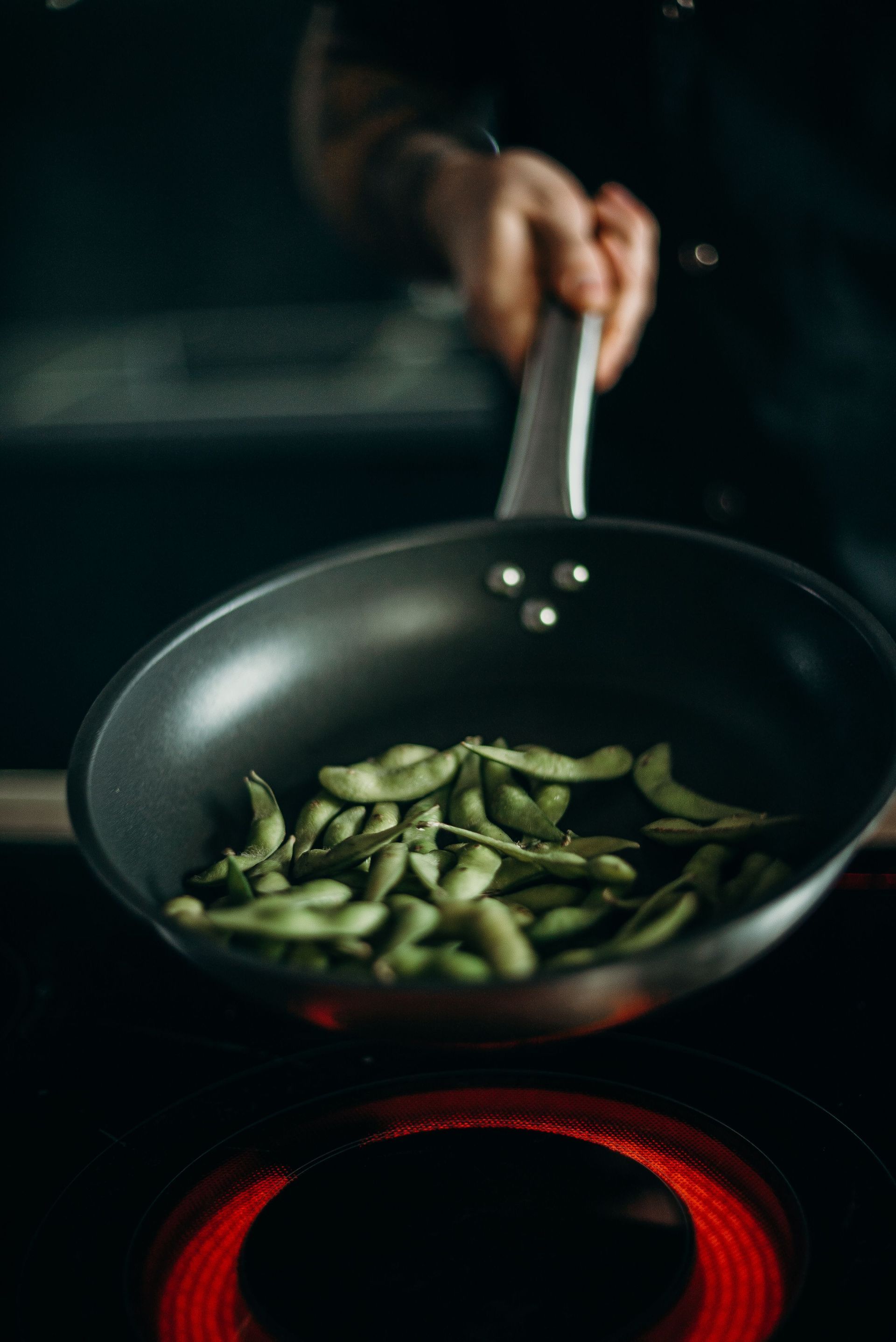
Green vegetables in a frying pan on a dark cooking surface

5. Much of the seed oil you eat comes with the fries (expert interpretation)

One satirical post listed all the places seed oils show up, including chips and fries from the "same vat. No notes." That's the useful part of the debate. For many guys, a big share of seed oil comes from fried and ultra-processed food, the kind you get with takeout.


Some people lose fat after they "quit seed oils." We found no evidence that cutting seed oils alone causes fat loss. The likelier explanation is that they stopped eating so much fried and processed food. That's our inference, not a study result.


Heavily reused frying oil is a separate, real food-safety question. A splash of oil in your own pan at home is a different situation.

6. What to do in your own kitchen (expert interpretation)

Look at your whole diet before the oil. Protein at most meals, plenty of plants and a calorie intake that fits your goal matter far more than which bottle is by the stove. Our post on how much protein you need to build muscle covers the first piece.


Eat fried takeout less often. That one change cuts much of the seed oil and a lot of calories.


Cook with oil sensibly. Olive oil, canola or whatever you have, used in normal amounts. Every cooking fat is calorie-dense, so measuring it now and then helps if fat loss has stalled.


Don't expect a fat swap to change your body. Switching to butter or tallow won't speed up fat loss, because they're just as calorie-dense. And the Cochrane review points the other way for heart events, since cutting saturated fat lowered them.


Fix the boring stuff first. A calorie deficit, enough protein, lifting and daily walking will do more than any ingredient rule. That's the whole idea behind the boring fat-loss stack. Sleep belongs on that list too, as our post on testosterone in young men explains.


If you have heart disease, high cholesterol or a family history of either, take your diet questions to your doctor, who can read your bloodwork.

The bottom line

The case against seed oils rests mostly on two recovered trials from the 1960s and 70s in heart patients and institutionalized adults, which showed no benefit and one signal of harm. Larger reviews point toward modest heart benefits when these fats replace saturated fat. Seed oils aren't your problem. The fries they come in are much more likely to be.


If you want a simple place to start building better daily habits, get The Doctrine of Becoming, a free 21-day reset of practices you adapt into your own lifestyle. If you'd rather have a coach build your training and nutrition around your goals, see coaching, $99/month.


Recent Posts

Scoop of white protein powder on a teal blue background
By Jonathan Chu • November 16, 2026
Can you build muscle with no supplements? What the research says about protein powder, creatine, caffeine and pre-workout, and what's just marketing.

A neatly made bed in a softly lit bedroom
By Jonathan Chu • November 14, 2026
Testosterone in men looks to be falling, but the viral fixes miss. What studies show on sleep, body fat and lifting, and when to get bloodwork.
Colorful healthy vegetables and vegetables including peppers, broccoli and cauliflower representing
By Jonathan Chu • November 14, 2026
Deficit, protein, lifting and walking really are most of fat loss. Here's what the research shows for each, and why sleep belongs on the list.

Barbell and weight rack in an empty gym
By Jonathan Chu • November 12, 2026
A new trial put people on tirzepatide with or without weight training. Weight loss was the same, but strength went in opposite directions.

Close-up of a cable machine and weight stack in an empty gym.
By Jonathan Chu • November 11, 2026
A viral post says skip triceps for a better physique. What studies on compound lifts, isolation work and overhead extensions actually show.
Loaded barbell on the floor of an empty gym
By Jonathan Chu • November 10, 2026
Is grunting in the gym real effort or a show? What studies on grunting, breathing and bracing show, and how to brace for heavy lifts.
Dumbbells on a gym rack
By Jonathan Chu • November 9, 2026
Does focusing on a muscle help it grow? What small trials, bench-press activity data and rep-tempo research can—and cannot—tell you.
Loaded barbell resting on an empty gym floor, black and white
By Jonathan Chu • November 8, 2026
Is FFMI 25 really the natural limit? What the research shows, what it can't prove, and why enhanced physiques are a poor benchmark for your progress.
Empty squat rack with a barbell on the pins in soft gym light
By Jonathan Chu • November 7, 2026
Can fewer sets build muscle? What volume research says about growth, effort, and diminishing returns, plus how to assess a shorter lifting program.
Empty stationary bikes in a quiet gym cardio corner, soft light, no people
By Jonathan Chu • November 6, 2026
Zone 2 isn't dead—Attia refined it for your clock. Here's when easy cardio still wins and when limited hours need harder work.
Show More