Does Squeezing the Muscle Build More of It? What the Mind-Muscle Research Says

Jonathan Chu • November 9, 2026

Share this article

A clip of Arnold Schwarzenegger talking about how muscles grow has been circulating on X. Captions often turn it into a hard rule: hold the squeeze, or nothing grows. That viral framing is sentiment, not a verified primary quote, and it overstates the research.


One side says the bodybuilders were right. The other calls the mind-muscle connection bro science. Both are partly right. The studies are narrower than either camp.


Here's what they show, where they stop, and how to use focus without treating it as a universal growth switch.


The study behind "squeeze it to grow it"

The best-known test is a 2018 trial by Schoenfeld and colleagues. Thirty untrained college-aged men trained three days a week for eight weeks, doing 4 sets of 8 to 12 reps. One group focused on contracting the target muscle. The other focused on getting the weight up.


The internal-focus group gained more elbow-flexor thickness: 12.4% versus 6.9%. That is the number mind-muscle videos quote most.


Quad thickness changed about the same in both groups. Similarity is not proof the squeeze does nothing for legs, and a non-significant difference is not evidence the approaches are equivalent. Strength differences also did not reach statistical significance.


Honest summary: in one small beginner trial, focusing on the muscle helped the biceps grow more. The quad data did not show a clear advantage either way. That supports trying an internal focus on some exercises. It does not prove the squeeze doubles gains across the board.


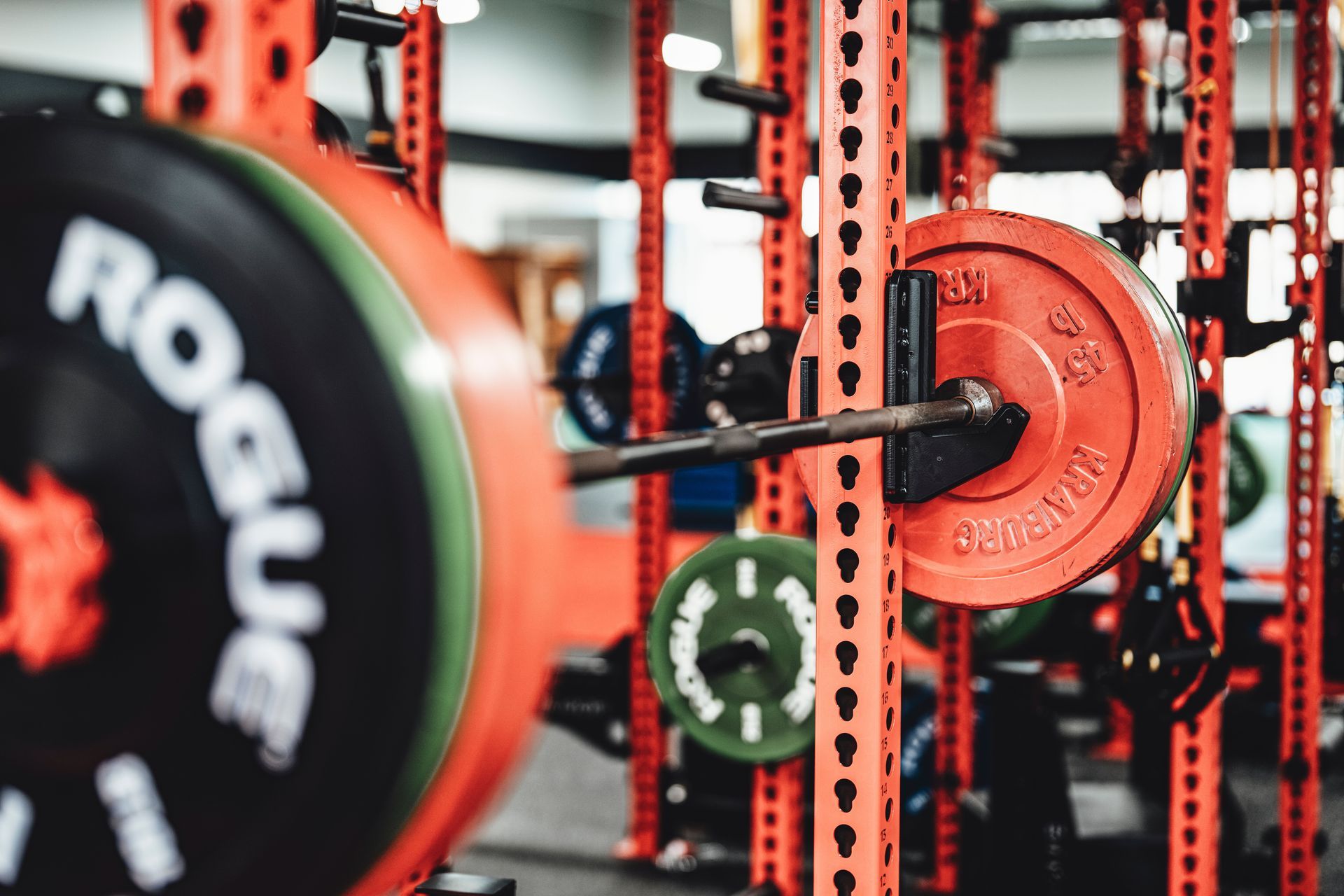
Loaded barbell resting in a power rack

Why the squeeze may fade on heavy sets

A 2016 study by Calatayud and colleagues tested 18 trained men on the bench press at 20% to 80% of one-rep max, with focus on chest, focus on triceps, or normal benching.


Focus raised muscle activity, measured with surface electrodes, from 20% to 60% of max. At 80%, the effect disappeared. The authors described a threshold between 60% and 80%. That threshold comes from these bench participants only. It is not a tested rule for every lift or muscle.


One likely explanation, labeled as interpretation rather than a finding of this study, is that heavy loads already demand most of what the muscle can give.


Important caveat: this measured muscle activity, not growth. Higher activity during a set is a clue, not proof of more growth over months. Treat it as a reason the squeeze may matter less on very heavy bench work, not as a growth result.


The trade-off the clip usually skips

In a published commentary on the Calatayud study, Halperin and Vigotsky noted a well-established downside from the motor-learning literature: focusing on specific body parts tends to hurt exercise performance compared with focusing on the movement's outcome.


That commentary is not a trial of heavy squat performance, and it does not quantify lost reps or load for any one cue. Take it as a caution that internal focus can carry a performance cost, not as a tested cue sheet for every compound lift.


Slow reps and "time under tension" aren't magic either

Squeeze content often arrives with strict tempo rules. The evidence does not require them.


A 2015 meta-analysis of eight studies by Schoenfeld, Ogborn and Krieger found similar growth for repetition durations from 0.5 to 8 seconds when people trained to failure. That is a review summary, not a universal prescription. Reps lasting over 10 seconds looked worse for growth, though few controlled studies cover that.


Pick a controlled pace you can repeat, and spend your energy on effort instead of a stopwatch.


Cable machine handle in an empty gym

Is the viral Arnold claim right?

Partly. Intent and control can help, especially on smaller muscles and isolation work, and the 2018 trial backs that up for arms in beginners.


The viral "motion alone grows nothing" framing is too strong. The same trial did not show a clear extra quad benefit, which is not the same as proving no leg benefit. Lifters also grow without consciously squeezing every rep when they progress over time. Related training-dose questions are in our low-volume lifting breakdown.


The useful part is the attitude. Rushing reps can leave a lot on the table. You can bring more intent to a set without turning every set into a meditation, and without treating every set that stops short of failure as automatically wasted.


How to use it in your training

These are coaching suggestions based on the studies above, not rules from a single trial and not a tested routine for every exercise.


Consider an internal focus on isolation and moderate-load work. On curls, lateral raises, rows, cable flyes or leg extensions, some lifters find that paying attention to the target muscle helps them feel the work. That is an optional individual cue, not a claim that those moves in an 8 to 15 rep range have the most research support. Productive sets do not all need to finish close to failure.


Consider outcome cues on heavy compound lifts. On squats, deadlifts and top sets of bench, many lifters prefer cues like "drive the floor away" or "push the bar off your chest." In the bench EMG study, the muscle-focus effect faded by 80% of max in those participants. That is a reason for caution on very heavy bench work, not proof of the same threshold everywhere.


Don't chase a feeling instead of progress. If you can feel a muscle working but your weights and reps haven't moved in months, the feeling isn't doing its job. Track your lifts, add reps or weight over time, and eat enough protein. If you're unsure how much, start with our protein guide.


Keep your tempo simple. Lower under control, lift with intent, and don't bounce. Use a repeatable pace with good form rather than treating 0.5 to 8 seconds as an exact prescription.


Use the squeeze as a short experiment on lagging body parts. If your biceps or rear delts never seem to get worked, slowing down and focusing on the contraction for a few weeks is a reasonable, low-risk experiment. If time is the issue, supersets can help you fit in that extra work.


The bottom line

The mind-muscle connection is worth taking seriously as a tool, not a law. One small beginner trial found more biceps growth with a muscle focus. The same trial did not show a clear quad advantage, which is not proof of no benefit. Bench EMG data suggests the focus effect can fade at heavy loads in that setting, and a commentary warns that body-part focus can cost performance. Within ordinary tempos, rep speed mattered less than viral tempo rules imply.


Use the squeeze where it helps. Use outcome cues where performance matters more. And whatever the lift, be in the rep instead of just near it.


If you want a place to start, get The Doctrine of Becoming, a free 21-day reset of practices you adapt into your own lifestyle. If you want a coach to build a plan around your schedule and keep your training honest, see coaching, $99/month.


Recent Posts

Scoop of white protein powder on a teal blue background
By Jonathan Chu • November 16, 2026
Can you build muscle with no supplements? What the research says about protein powder, creatine, caffeine and pre-workout, and what's just marketing.
Two bottles of cooking oil on a light kitchen counter
By Jonathan Chu • November 15, 2026
Are seed oils poison? What the old trials, big reviews and inflammation studies show, and why fried takeout matters more than your cooking oil.
A neatly made bed in a softly lit bedroom
By Jonathan Chu • November 14, 2026
Testosterone in men looks to be falling, but the viral fixes miss. What studies show on sleep, body fat and lifting, and when to get bloodwork.
Colorful healthy vegetables and vegetables including peppers, broccoli and cauliflower representing
By Jonathan Chu • November 14, 2026
Deficit, protein, lifting and walking really are most of fat loss. Here's what the research shows for each, and why sleep belongs on the list.
Barbell and weight rack in an empty gym
By Jonathan Chu • November 12, 2026
A new trial put people on tirzepatide with or without weight training. Weight loss was the same, but strength went in opposite directions.
Close-up of a cable machine and weight stack in an empty gym.
By Jonathan Chu • November 11, 2026
A viral post says skip triceps for a better physique. What studies on compound lifts, isolation work and overhead extensions actually show.
Loaded barbell on the floor of an empty gym
By Jonathan Chu • November 10, 2026
Is grunting in the gym real effort or a show? What studies on grunting, breathing and bracing show, and how to brace for heavy lifts.
Loaded barbell resting on an empty gym floor, black and white
By Jonathan Chu • November 8, 2026
Is FFMI 25 really the natural limit? What the research shows, what it can't prove, and why enhanced physiques are a poor benchmark for your progress.
Empty squat rack with a barbell on the pins in soft gym light
By Jonathan Chu • November 7, 2026
Can fewer sets build muscle? What volume research says about growth, effort, and diminishing returns, plus how to assess a shorter lifting program.
Empty stationary bikes in a quiet gym cardio corner, soft light, no people
By Jonathan Chu • November 6, 2026
Zone 2 isn't dead—Attia refined it for your clock. Here's when easy cardio still wins and when limited hours need harder work.
Show More